Embraer selects Eaton’s fuel-inerting solution for KC-390 aircraft
巴西航空工业公司为KC-390飞机选用伊顿的燃料惰化解决方案
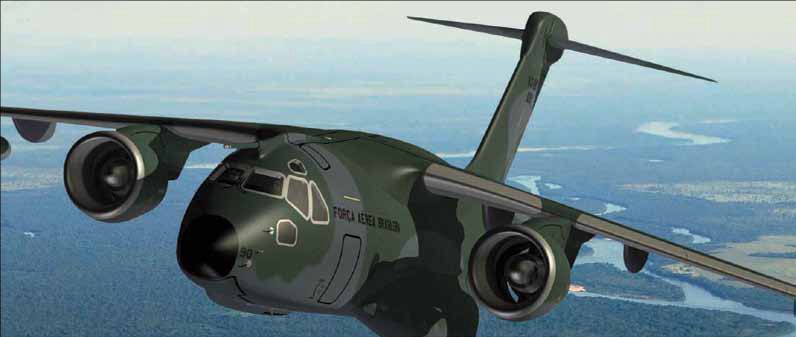
Location: S?o José dos Campos, S?o Paulo
地点:圣保罗州圣若泽杜斯坎普斯
Segment: Military领域:军事
Problem: Develop an inerting system specifically for wing tanks that could achieve FAA certification
问题:开发一种专门用于机翼油箱的惰化系统,以获得美国联邦航空管理局(FAA)认证
Solution: By integrating the venting and fuel systems, Eaton designed a complete interaction to deliver a single solution for wing-tank inerting.
解决方案:通过整合通风和燃油系统,伊顿设计了一种完整的交互方案,为机翼油箱惰化提供单一解决方案。
Results: Enhanced safety for the KC-390 while reducing overall aircraft weight and increasing reliability
成果:在减轻飞机整体重量并提高可靠性的同时,提升了KC-390的安全性
Background:背景:
In 2011 Eaton was selected by Embraer S.A. to supply fuel system components for the next generation of KC-390 military transport aircraft. In early 2012, Embraer announced that Eaton also would supply the aircraft’s on board inert gas generating system, or OBIGGS.
2011年,伊顿被巴西航空工业公司(Embraer S.A.)选中,为其新一代KC-390军用运输机供应燃料系统部件。2012年初,巴西航空工业公司宣布,伊顿还将为该飞机供应机载惰性气体生成系统(OBIGGS)。
Eaton will design, develop and supply airframe fuel system components for the KC-390, which is currently in development, and also provide production units and aftermarket support throughout the life of the program.
伊顿将为目前处于研发阶段的KC-390飞机设计、开发并供应机身燃料系统部件,并在整个项目周期内提供生产单元和售后支持。
Eaton’s experience on many of the world’s most advanced civilian and military aircraft platforms will be instrumental in helping Embraer achieve the latest regulatory certification requirements for the KC-390, including FAA inerting system certification. In 2011, Eaton successfully completed the industry’s first multi-tank inerting gas distribution system certification process for the Boeing 787. Eaton’s in-depth knowledge of aircraft fuel and vent systems is an essential background for fuel tank inerting systems, where interactions between inert gas deposit locations and the fuel tank vent system are critical for safe aircraft operation.
伊顿在世界上许多最先进的民用和军用飞机平台上的经验,对于帮助巴西航空工业公司实现KC-390的最新监管认证要求至关重要,包括FAA惰性系统认证。2011年,伊顿成功完成了波音787多油箱惰性气体分配系统的行业首次认证流程。伊顿对飞机燃油和通气系统的深入了解是燃油箱惰性系统的重要背景,因为惰性气体沉积位置与燃油箱通气系统之间的相互作用对于飞机安全运行至关重要。
Challenge:挑战:
Eaton’s legacy in both fuel and pneumatic systems reaches back more than 60 years. What sets Eaton apart in the industry is how it has combined capabilities to develop both the nitrogen generation and inertgas distribution sub-systems for OBIGGS.
伊顿在燃料和气动系统领域的传承已超过60年。伊顿在行业中的独特之处在于,它整合了自身能力,开发了OBIGGS的氮气生成和惰性气体分配子系统。
As the fuel-inerting certification requirement transitioned from military to civilian aircraft, so did technical challenges associated with developing fuel-inerting systems for different fuel tank designs. Initial civil fuel-inerting systems focused on only one part of the aircraft fuel tanks — the center fuel tank in the fuselage. The introduction of composite-winged civilian aircraft presented a new challenge to the industry to develop an inerting system specifically for wing tanks that could achieve FAA certification. Military platforms such as the KC-390 also include wing tanks in their fuel system design.
随着燃料惰化认证要求从军用飞机过渡到民用飞机,开发适用于不同油箱设计的燃料惰化系统所面临的技术挑战也随之而来。最初的民用燃料惰化系统仅针对飞机油箱的一部分——机身中央油箱。复合材料机翼民用飞机的出现,给行业带来了新的挑战,即开发一种专门用于机翼油箱的惰化系统,以获得美国联邦航空管理局(FAA)的认证。像KC-390这样的军用平台,其燃油系统设计中也包含机翼油箱。
Solution:解决方案:
The challenge for Eaton was proving that every single bay in the wings could be inerted. By integrating the venting and fuel systems, Eaton designed a complete interaction to deliver a single solution for wing-tank inerting.
伊顿面临的挑战在于证明机翼上的每一个油箱隔舱都能实现惰化。通过整合通风和燃油系统,伊顿设计了一套完整的交互方案,为机翼油箱惰化提供了一体化解决方案。
Eaton uses computational fluid dynamics (CFD) to analyze fluid flow and model the operation of fuel pumps and valves. For recent aircraft certification programs, Eaton has expanded this capability to analyze the mixing of nitrogen-enriched air (NEA) inside aircraft fuel tanks. Initially, results were verified with a fifth-scale model of an aircraft fuel tank fitted with oxygen sensors. Eaton expanded this CFD capability and verification by using a B737 wing tank for a larger-scale test. The rig was again fitted with oxygen sensors to verify results of CFD analyses. Eventually, the FAA validated all of these models during the B787 certification process.
伊顿利用计算流体动力学(CFD)来分析流体流动并模拟燃油泵和阀门的运行。对于近期的飞机认证项目,伊顿已将这一能力扩展至分析飞机燃油箱内富氮空气(NEA)的混合情况。最初,结果是通过一个装有氧气传感器的飞机燃油箱五分之一比例模型进行验证的。伊顿通过使用波音737机翼油箱进行更大规模的测试,进一步扩展了CFD能力并进行了验证。该测试装置再次装有氧气传感器,以验证CFD分析的结果。最终,美国联邦航空管理局(FAA)在波音787认证过程中验证了所有这些模型。
The experience from CFD analysis and testing has enabled Eaton to accurately characterize mixing characteristics of different compartments around the aircraft. Validating models are then integrated with the NEA generation system, distribution system, flammability model and vent system to provide a powerful tool for analyzing the complete inerting system, as well as the interaction of all of its sub-systems.
CFD分析与测试所积累的经验值,使伊顿能够精确表征飞机各舱室的混合特性。随后,验证模型被整合到NEA生成系统、分配系统、可燃性模型和通风系统中,为分析完整的惰化系统及其所有子系统的相互作用提供了强大的工具。
Result:结果:
Eaton’s experience in certifying multi-tank inerting gas distribution systems will enhance safety for the KC-390 while reducing overall aircraft weight and boosting reliability. The certification process can take up to four years to complete, and the KC-390 currently is on schedule to achieve full certification in 2016.
伊顿在认证多油箱惰性气体分配系统方面的经验将提升KC-390的安全性,同时减轻飞机整体重量并提高可靠性。认证过程可能需要长达四年的时间才能完成,目前KC-390正按计划将于2016年实现全面认证。
The KC-390 contracts clearly signal that Eaton’s innovation in fuel and inerting systems and its focus on expanding into emerging markets are driving global business growth. Eaton will continue to develop fuel-inerting systems and related technologies for newgeneration military, commercial and business jet applications that optimize aircraft safety, reliability, weight savings and fuel efficiency.
KC-390合同明确表明,伊顿在燃油和惰化系统方面的创新及其拓展新兴市场的战略,正在推动其全球业务增长。伊顿将继续为新一代军用、商用及公务机应用开发燃油惰化系统及相关技术,以优化飞机的安全性、可靠性、减重效果和燃油效率。